Peter Sellis: DAU/MAU math beats new-market growth bets
Freed from any corporate comms team, Snap and Discord's former product chief argues the median PM is bad by mathematical construction, that collaboration has hidden costs no executive admits, and that Snap's ad business was structurally hobbled — not by poor execution. He also says growth almost always comes from doubling down on the existing core, citing turnarounds at both Snap and Discord as proof.
- Terrorist-org teams — Sellis says he designs teams like a 'terrorist organization': a shared ideological culture plus a clear structure of who can be trusted with which decision, to avoid the coordination costs of over-collaboration.
- Managing Nikita Bier — Bier joined Discord's team after Sellis's org acquired his startup and spent over a year there; Sellis compares managing him to Liam Neeson in Taken — a 'very special set of skills' but not suited for day-to-day tasks.
- Median PM is bad — Sellis argues product management skill is normally distributed, but only the right tail becomes PMs, turning it into a power distribution where the median PM sits well below the mean — worsened during the ZIRP era when PM became lucrative for non-technical hires.
- Snap's ad ceiling — Three structural reasons Snap's ads business underperformed: its Gen Z/Gen Alpha user base hits a documented CPM discontinuity around age 17-18 and 18-21 due to targeting restrictions; the app opens to a camera, not a feed, with no natural ad placement; and it's fundamentally a messaging app, a format with no strong ad products.
- Snap's real scale — Snap reached roughly $4 billion in ad revenue faster than Twitter, Reddit or Pinterest despite launching later, and is the number-one messaging, maps, camera and astrology app among under-21s in most Western countries, per Sellis.
- Growth from the core — After Snap's disastrous 2018 redesign flattened DAU, the team refocused on Android performance for existing users and drove years of renewed growth; at Discord in 2024, refocusing on 'intentional multiplayer gaming' — not Midjourney's boom — drove some of the platform's fastest-ever growth.
- OpenAI ads bet — Sellis says OpenAI is 'speedrunning' the ad infrastructure Meta built from 2010-2020, using a VCG-style auction mechanism, but calls it a mistake that OpenAI made its top paid tier ad-free so early, cutting off its most valuable users from a new ad format.
- Ride the best, not the average — Sellis says he deliberately gives his strongest performers more responsibility until they fail rather than spending time developing the average performer.
- Three PM oxymorons — Great PMs combine confidence bordering on arrogance with real humility about credit; love of process with comfort in ambiguity; and long-term vision with an almost annoying bias for daily action.
- SpaceX burns the ships — Sellis cites SpaceX's decision to sunset the Falcon 9 — the most cost-effective reusable launch vehicle ever built — in favor of Starship as a model for guarding against disruption before it happens.
- Core product value phrases — At Snap the internal mantra was 'the fastest way to share a moment with your best friends'; at Discord it was 'the best way to talk and hang out with your friends before, during, and after playing games' — both tied to specific retention metrics used to prioritize roadmaps.
- Spicy takes — Sellis says the single most important career decision is choosing a life partner, and separately argues — carefully hedged — that certain inalienable traits of PMs and designers, including background and identity, shape their ability to build for specific user cohorts.
In their words
Most product managers are bad and are often net negative to the company.15:24
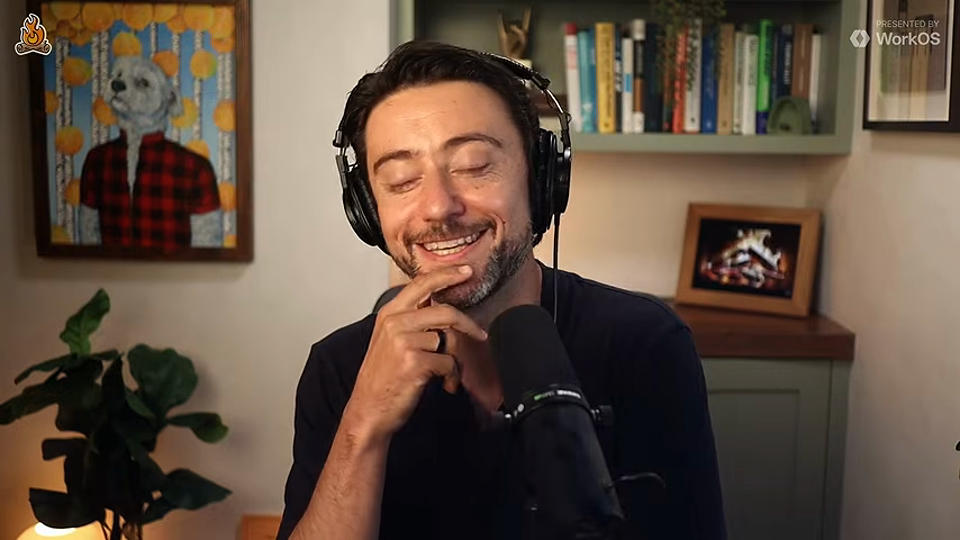
The great product managers are exiting the system. They're becoming founders. They're becoming executives. It's kind of set up to be this profession where the median product manager is actually probably pretty bad.0:36
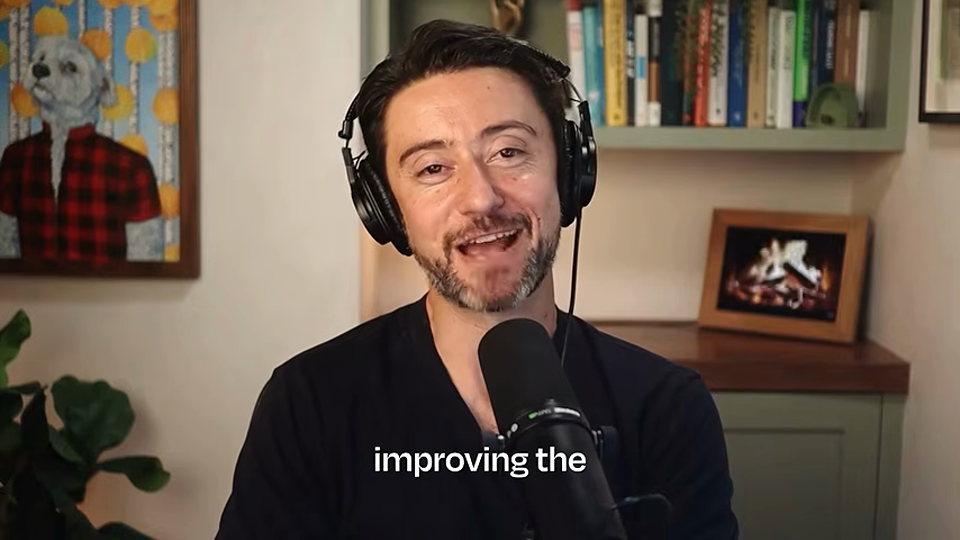
Probably one of my biggest failures was the ability to drive camera monetization. It was it was just too hard. Like we I I couldn't figure it out or I couldn't greenlight the teams that could figure it out.23:50
Collaboration comes with incredible coordination costs. And coordination costs essentially assure that you're moving as slow as the slowest node um in the system.6:30
Disclosure · Sellis is not currently employed and has no product, book, or company to promote in this episode; he jokes about being a "free agent" open to roles, including at OpenAI.
One thing to add — One thing to add — Sellis's Snap ad-revenue and penetration figures (the ~$4B mark, "70 to 100% penetration") are self-described as dated and unverified rather than sourced numbers, so treat them as directional claims from someone with a stated stake in defending his old team's record. His claim about identity traits shaping PM effectiveness is explicitly hedged by Sellis himself as uncomfortable and non-actionable, which is worth flagging rather than smoothing over.
One thing to try tonight
Write out your product's "core product value" in three parts — like Snap's "fastest way to share a moment with your best friends" — then check whether your current roadmap items actually map to it.