Exa says AI will out-search humans 1,000-to-1 by 2027
Will Bryk says 2026 is the crossover year: machine-issued web searches now exceed human ones, and within a few years the gap will widen a thousandfold. He traces Exa from a rejected API request in 2022 to a company serving 5,000 businesses, arguing that even a giant model is tiny next to the internet and will always need to search outside itself.
- Crossover chart — Bryk shows web searches per day over 30 years and says 2026 is the year AI-system searches exceed human searches, heading toward a 1,000x gap in the next few years.
- Customer base — Exa now serves over 5,000 companies and 400,000 developers, including Cursor for technical documentation and news, HubSpot for go-to-market lists, and various financial agents.
- The problem — Bryk argues the web holds on the order of a trillion pages and Google acts like a recommendation engine, not a database: typing 'shirts without stripes' returns shirts with stripes.
- Founding thought experiment — Running a language model over one query and one document gives near-perfect matching, but doing that across a trillion documents per search would cost roughly $10 million per query, so Exa exists to cut that cost by nine to twelve orders of magnitude.
- Origins as Metaphor — Exa started in 2021 under the name Metaphor, launched a consumer search engine in 2022, and ChatGPT launched two weeks later and changed the world.
- The API pivot — A stranger's Twitter message asking for API access, followed by more requests including from Bryk's roommate downstairs, led the team to realize AI systems need search because even a model as large as GPT-5 is tiny compared to the internet.
- Product today — Exa offers a 200-millisecond search endpoint for voice agents, efficient token extraction that trims documents to their most important roughly 100 tokens, and structured output for use cases like recruiting agents.
- Not one engine — Bryk says Exa effectively runs 5,000 different search engines, one tuned per customer, rather than declaring a single definition of perfect search.
- Exon marketplace — Exa recently launched a system letting private data providers partner with Exa so developers can query both public web data and non-public sources like SimilarWeb-style metrics.
- 2027 ambition — Bryk says Exa's pace has accelerated so that every quarter or two now matches five years of past progress, and the company's goal for 2027 is a world where information queries resolve as if a year of research happened in a second.
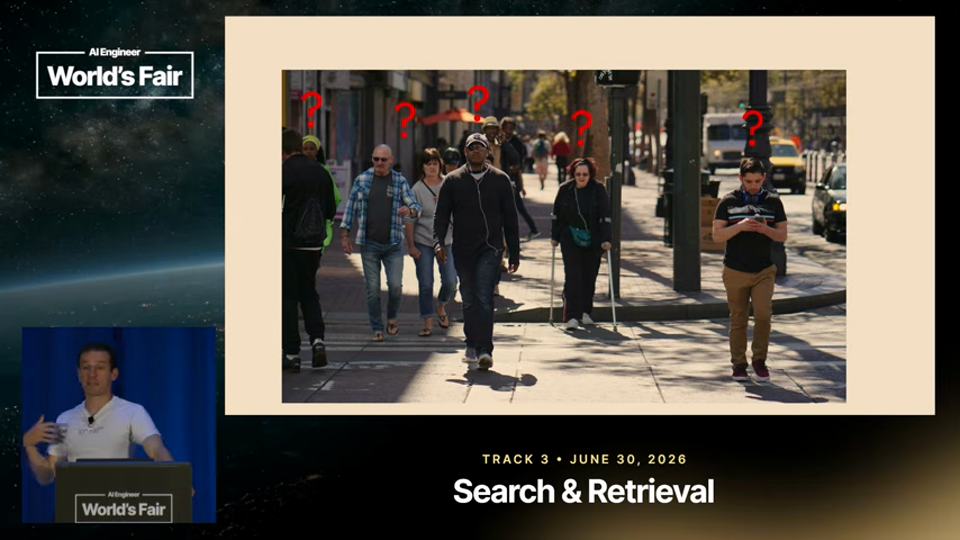
- Stakes framing — Bryk ties the mission to the 2028 presidential election, saying near-perfect information for everyone matters for how society coordinates and avoids what he calls a 'dystopia.'
In their words
this year we expect the number of searches from AI systems to exceed that of humans0:37
if you notice, you get shirts with stripes3:05
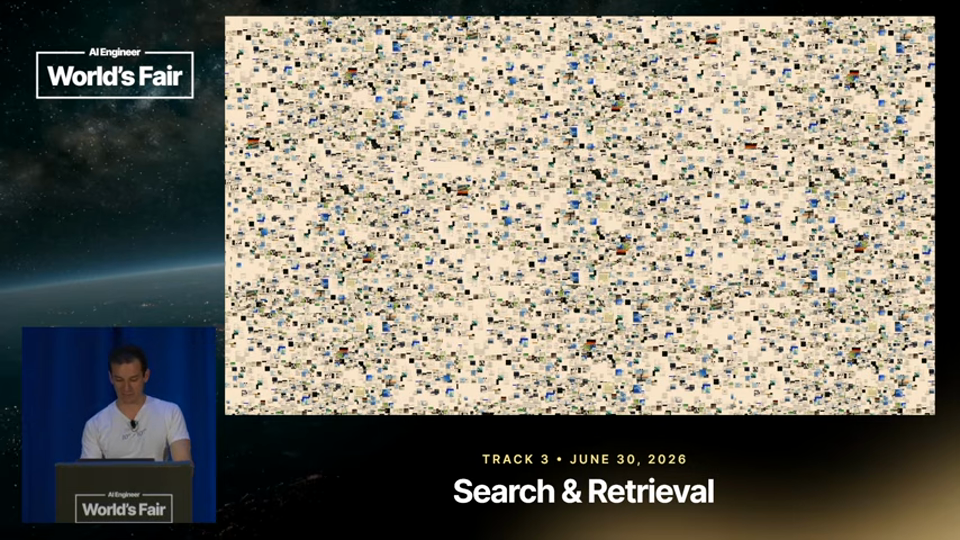
do that over a trillion documents for every search and you get a perfect search engine or near perfect. Uh the problem is that would cost like $10 million per search.6:10
if we don't fix this problem I believe we get a world that looks like this a dystopia4:43
Disclosure · Will Bryk is CEO and co-founder of Exa; the talk promotes Exa's search API and its Exon data marketplace.
One thing to add — One thing to add — the $10 million-per-query figure and the 1,000x future search-volume gap are Bryk's own projections, not independently verified numbers, so they should be read as founder framing rather than measured fact. The talk is light on technical detail about how Exa actually achieves its cost reductions beyond mentioning embeddings and "stack more layers."
One thing to try tonight
Try Exa's search API on a complex, list-style query it claims Google can't handle well, like "find every startup funded by Y Combinator working on AI, give me their batch and status," and compare the output to a plain Google search.