Dioxus generated 10,000s of Rust lines with AI — almost none merged
Jonathan Kelley expected AI coding agents to accelerate a five-year-old Rust app framework overnight. Instead his team's first attempt produced a mountain of draft code that never cleared the merge bar, and the real gains showed up in unglamorous places like release checklists and Kotlin/Swift build plugins rather than in tests or architecture.
- Origins — Kelley skipped a Google internship in 2021 to build Dioxus, a cross-platform Rust app framework using HTML/CSS as markup instead of React Native or Flutter.
- Built from scratch — with no off-the-shelf components in 2021, the team built reactivity, font rendering, hot reloading, and bundling themselves, including what he calls 'building a web browser.'
- Scale today — Dioxus has about 37,000 GitHub stars, millions of downloads, and an estimated 200 million cumulative end users, used for voting software, data science tools, and satellite collision avoidance.
- Blitz engine — the team extracted a browser-grade CSS engine from Firefox to build Blitz, with apps under 5MB bundle size and under 50MB RAM, versus Electron.
- Subsecond hot reload — patches running native Rust/C/C++ code in place in about 100 milliseconds, which Kelley says no other hot reload engine matches across languages and runtimes.
- The slop cannon — after maxing out Claude Code subscriptions, the team wrote tens of thousands of lines of Rust that almost entirely failed to clear the merge bar and still sit in draft.
- Rust as a feature — the learning curve the team spent five years reducing is now an advantage, because agents absorb the borrow checker and edge cases for the developer.
- Where it worked — Kotlin and Swift build plugins that normally take years (compared to React Native turbo modules) shipped in two to three weeks, with implementation done in a single day.
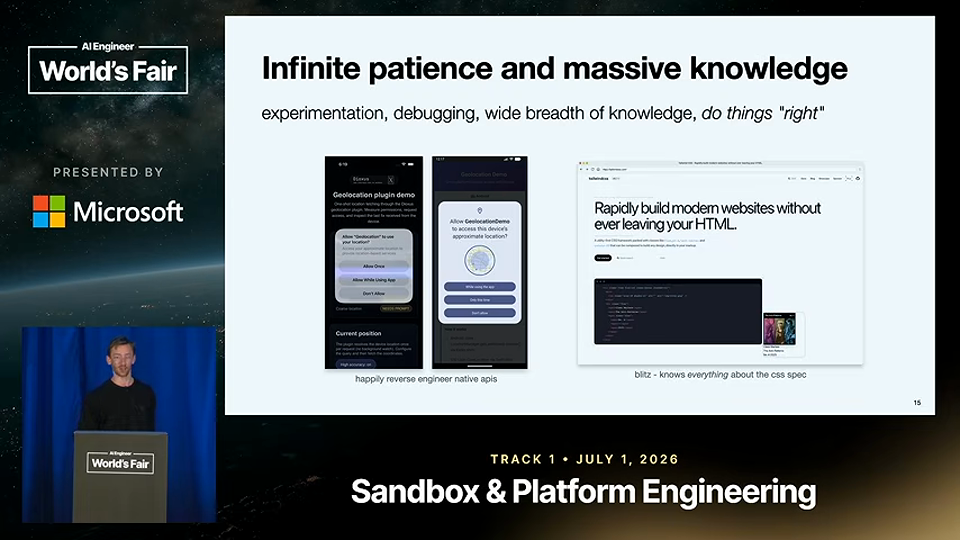
- CSS debugging — agents recall exactly how Chrome and Safari resolve layout and painting issues, letting the team fix Blitz bugs the 'right way' instead of taking shortcuts.
- Mundane tasks — with only three core engineers, agents now verify release checklists, backport bug fixes, and keep documentation accurate, enabling more patch releases than ever before.
- Testing gap — agents write tests for any API but, like humans, often fail to write the right tests; the team still manually enumerates test conditions, though agents excel at building fuzzing harnesses.
- Architecture — Architecture still manual — agents will ship a refactor-avoiding fix rather than redesign, so most human time now goes into software architecture rather than writing code.
- Cognition ac — Cognition acquisition — Dioxus joined Cognition, and Kelley closed by saying Cognition is hiring.
In their words
Unfortunately, very little of the code cleared our quality bar of should we merge this in.6:15
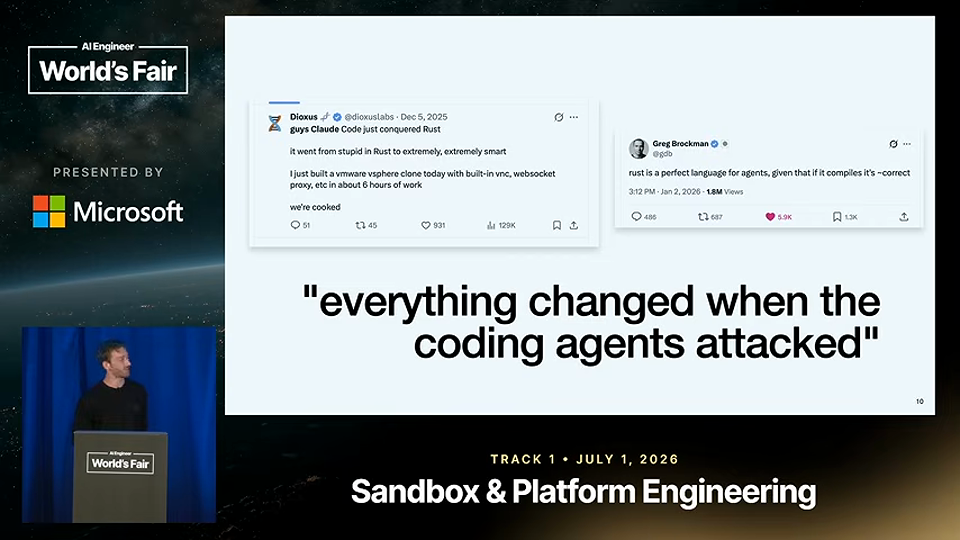
We definitely did not know how to properly wield these tools and it was way too easy to become what we call a slop cannon.6:28
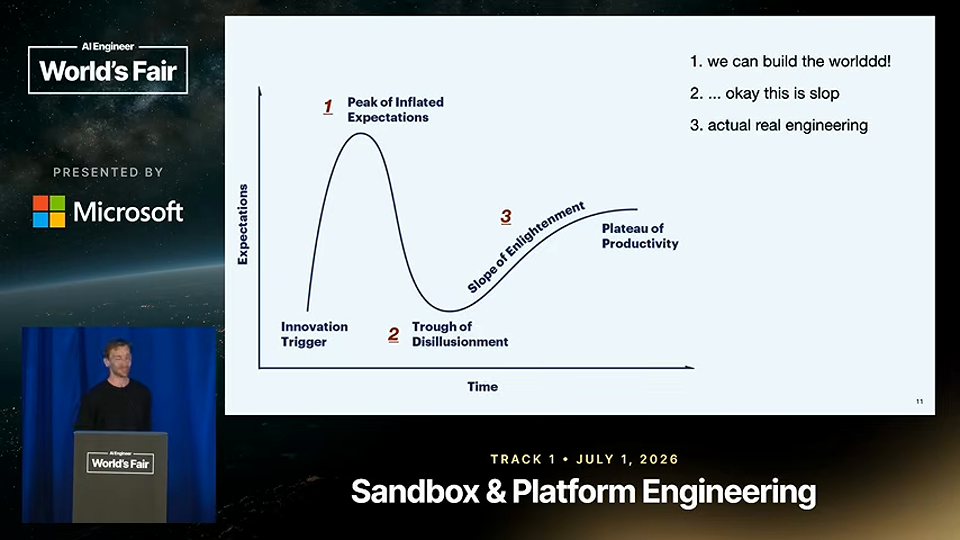
We were able to ship this in like two to three weeks with coding agents and we probably could have gone faster.10:49
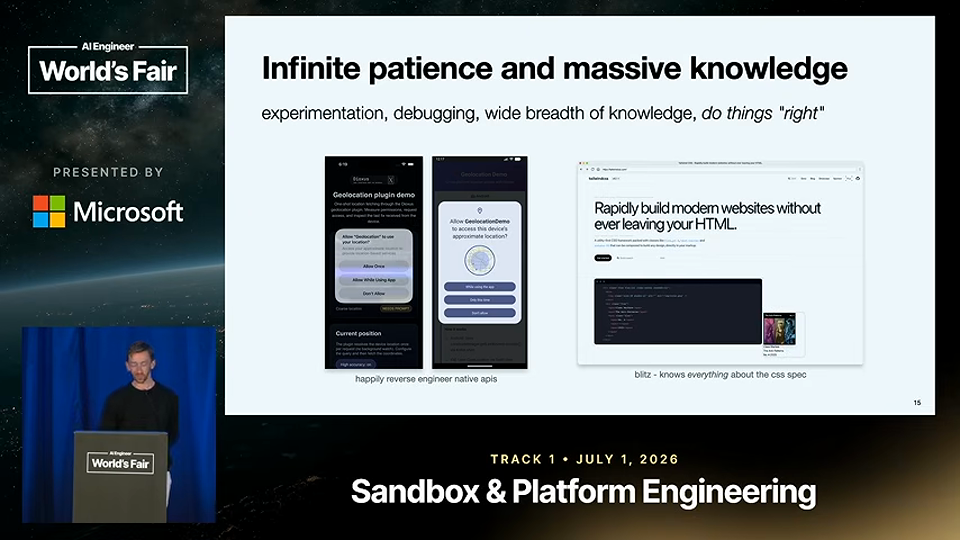
So coding agents give us the ability to maintain quality and do things the right way which is very interesting.11:52
Disclosure · Kelley is the founder of Dioxus Labs, which was acquired by Cognition; the talk ends with a Cognition hiring pitch, so this is self-promotional.
One thing to add — One thing to add — Kelley's own framing (code is cheap, quality is not) is worth stress-testing against the fact that his team's biggest AI win, Kotlin/Swift plugins, was still followed by two weeks of manual device testing, suggesting the human verification burden didn't disappear so much as move downstream. The testing gap he describes, agents writing tests for APIs but not the right tests, mirrors what other teams report, so it's likely not Dioxus-specific.</note> </invoke>
One thing to try tonight
Pick one tedious recurring task in your own repo, like a release checklist or backport, and hand it to a coding agent end-to-end tonight to see if it survives your review without edits.